Commonly used BYD SERIES chargers can be roughly divided into two types according to the circuit structure. Today, the editor will share with you what causes the faults in the charging place.
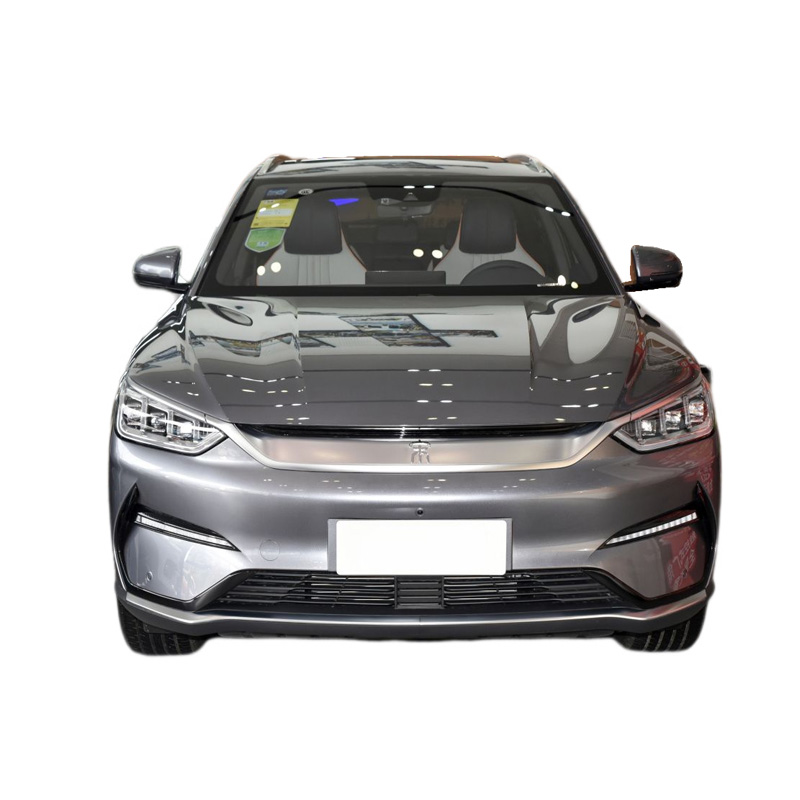
The primary phenomenon of high-voltage faults in BYD SERIES is that the indicator light does not light up, which is characterized by blown fuses, breakdown of the rectifier diode D1, and bulging or bursting of the capacitor C11. Q1 breaks down and R25 opens. Pin 7 of U1 is shorted to ground. R5 is open, U1 has no starting voltage. It can be corrected by replacing the above components. If the 7 pin of U1 has a voltage above 11V, and the 8 pin has a voltage of 5V, it means that U1 is basically normal. It is important to check whether the pins of Q1 and T1 are soldered. If Q1 breaks down one after another, and Q1 is not hot, usually D2 and C4 fail. If Q1 breaks down and gets hot, it usually means that there is leakage or short circuit in the low-voltage part, too large or the output pulse waveform of pin 6 of UC3842 is abnormal. The switching loss and heat generation increase greatly, causing Q1 to overheat and burn out. Other symptoms of high-voltage faults include flashing indicator light, low and unstable output voltage. Generally, the pins of T1 have weak soldering, or D3 and R12 are open, and TL3842 and its peripheral circuits have no working power. There is also a rare high-voltage problem that the output voltage is too high to be above 120V. In BYD SERIES, U2 is generally ineffective. R13 is open or U3 is broken down, which makes the voltage of pin 2 of U1 drop, and pin 6 sends out ultra-wide pulses. At this moment, the power cannot be turned on for a long time, otherwise the low-voltage circuit will be seriously burned. Most of the low-voltage faults are caused by the reverse connection between the BYD SERIES charger and the battery, which causes R27 to blow out and LM358 to break down. The phenomenon is that the red light is always on, the green light is off, the output voltage is low, or the output voltage is close to 0V, and it can be corrected by replacing the above components. In addition, the output voltage of W2 drifts due to jitter. If the output voltage is too high, the battery will be overcharged, severely dehydrated, and overheated, which will eventually lead to thermal runaway and explode the battery. If the output voltage is low, the battery will be undercharged. When both high and low voltage circuits are faulty, all the second and third tubes, BYD SERIES optocoupler 4N35, field effect tube, electrolytic capacitor, integrated circuit, R25, R5, R12, R27, especially D4 ( 16A60V, fast recovery diode), C10 (63V, 470UF). Avoid blindly electrifying BYD SERIES to further expand the scope of faults. Some BYD SERIES charger output terminals have special functions such as anti-reverse connection and anti-short circuit. In fact, an extra relay is added to the output end. In the case of reverse connection or short circuit, the relay will not work, and the BYD SERIES charger will have no voltage output.Remind everyone that some BYD SERIES chargers also have the functions of anti-reverse connection and short-circuit prevention. . After the power supply starts normally, the BYD SERIES charger will provide low-voltage operating power.


评论
发表评论